
India is the fastest growing economy after China, and is the fourth largest economy in purchasing power parity terms in the world, but lags neighbouring least developed countries like Bangladesh, Bhutan and Nepal in terms of various social indicators.
India with a per capita GDP of $3,015 has one of the lowest ranks at 127, according to the IMF.
The company's Indian operations are currently growing at 8 per cent and eight out of its 10 top products are market leaders in their respective segments.
The International Monetary Fund has reduced India's contribution to world gross domestic product in purchasing power parity terms to 4.6 per cent in 2007 from the earlier estimate of 6.4 per cent.

In the current year, India's economy will grow to become $ 3 trillion economy, sixth largest in world.
India also happens to be the most richly endowed agricultural nation in Asia having 169 million hectares of arable land, accounting for one-tenth of the world's arable land and a fifth of the world's irrigated land at 56 million hectares with a coastline extending to 8000 km and vast marine wealth. India is the 10th most industrialised country and fourth largest economy in terms of purchasing power parity with its GDP projected to grow at nearly 8 per cent in 2006-07.
India and China account for 64 per cent of GDP in 23 Asian countries included in a study but rank quite low when it comes to benefits percolating to their people.
India has retained its position as the fourth largest economy in the world on the basis of Purchasing Power Parity, behind the United States, China and Japan.

China would be an influential player in the bank

Extreme poverty in India declined by 38 million in 2021 to 167.49 million after a surge in the two preceding years, but remained above the 2018 level, the latest World Bank data shows. While for most countries poverty rose in 2020, when the Covid-19 pandemic hit the global economy, the data shows poverty shot up in India a year earlier in 2019 to 176.09 million from 151.79 million in 2018, the lowest pre-pandemic count. India's poverty rate at 11.9 per cent in 2021 also remained higher than the 2018 level of 11.09 per cent, though easing from 14.72 per cent in 2020.

'Of the 20 trading days of January till January 28, FIIs have been selling for 19 trading days'. 'When did FIIs withdraw money with this kind of intensity?' 'It never happened. It's the first. It did not happen even during the 2008-2009 financial crisis when Lehman went under.' 'Even then you did not have like a 19-day selling spree from the FIIs.'

But Indians work less than smaller countries with small populations like Bhutan, the Congo, Lesotho and Gambia.

If Ahmedabad is India's preferred candidate, as seems likely, hosting Olympics 2036 should give it a leg up: A bigger airport, a better metro network, more hotels, flyovers and so on, observes T N Ninan.

Following are the highlights of the Economic Survey 2022-23 tabled in Parliament on Tuesday

Musk blasted the "current lords and peasants system for who has or doesn't have a blue checkmark", using an expletive.

BRICS countries, including India, on Thursday voiced concern over the "fragile recovery" of global growth and the potential spillover effects from the "unconventional monetary policies" of the developed countries.

Even as India strives to climb the development mountain, the fact is that the mountaintop is already crowded. If it got there in 2047, India would be very much a late-comer, observes T N Ninan.

The spending on a typical RT-PCR test would take up 23 per cent of the monthly income of an average Indian, compared to 2 per cent in China. This is one of the deepest cuts in the pocket of an individual, in comparison to 14 other countries, reports Abhishek Waghmare.

'In Eastern Ladakh the Chinese attempted salami slicing.' 'Our response has been superb. Our military has responded magnificently.'

Prime Minister Narendra Modi on Sunday termed the BRICS as 'Building Responsive, Inclusive and Collective Solutions'.
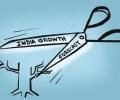
India's economy is projected to slow to 6.5 per cent in the fiscal year starting April but will remain the fastest growing major economy in the world as it fared better in dealing with the extraordinary set of challenges the globe has faced, the Economic Survey 2022-23 said on Tuesday. India's gross domestic product (GDP) growth of 6.5 per cent in 2023-24 compares with an estimated 7 per cent expansion in current fiscal year (April 2022 to March 2023) and 8.7 per cent in the previous year. Like the rest of the world, India too faced an extraordinary set of challenges in tightening financial conditions and supply chain disruptions from a prolonged war in Europe but "withstood them better than most economies", the annual document detailing the state of the economy said.

India is better positioned to face external shocks emanating from increasing geopolitical tensions, the aftermath of the COVID pandemic and the inevitability of climate change, Reserve Bank Deputy Governor Michael Debabrata Patra said on Monday. Relative to macroeconomic configurations in 2013 when India was described as one of the fragile five countries, he said, "India is better positioned currently, as its macroeconomic fundamentals have improved significantly, and external sector indicators point to the availability of enough cushions to manage external shocks." He was speaking at a conference on 'Growth And Development in the BRICS Economies' organised by the Delhi School of Economics (DSE) and the Indian Statistical Institute (ISI).

'The Modi visit will prove to be the watershed where India and the United States commenced technology trade and transfer.'
The US is likely to have per capita GDP of $57,455, about 20 times India's, indicative of how far India will stand in about a decade.
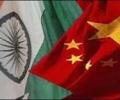
By 2013, the Chinese economy had become 2.7 times India's.

It would be ludicrous to expect Modi, Erdogan or Biden to pay to keep blue ticks on their respective official accounts. It would be equally ludicrous to expect the Delhi Metro or the Income Tax Department to pay, points out Devangshu Datta.
Inaugurating the first Engineers Conclave, 2013, Pranab Mukherjee said it is happening at a time when the world is beginning to emerge from the global economic crisis.

Whenever there is an evaluation scheme, it is human tendency to score as high as possible. None would like to highlight their shortcomings, and everyone likes to highlight their positives. This is what is happening in this context of rankings as well, points out Profesor N Ravichandran.

Why did Karnataka's economic prosperity fail to influence the nature of electoral promises made by political parties in the run-up to the assembly elections? asks A K Bhattacharya.
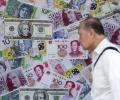
For several years the Chinese authorities have been taking steps to internationalise the use of the yuan.

India also fares poorly on maternal mortality rate.
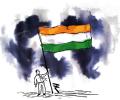
Even as both India and the world struggle to re-build after COVID-19, they face slow-burn problems that could develop into full-blown crises, observes T N Ninan.

The ever-astute Ravi Matthai, Director of Indian Institute of Management, Ahmedabad in 1971, offered me a basic salary of Rs 1,000 per month on my return from the United States. I doubt if IIMA could hire a faculty member at Rs 55,000 per month today! points out Dr Shreekant Sambrani.
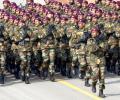
'India is ahead only of Pakistan in the amount spent on each soldier a year.' 'The Indian military is a manpower-heavy throng that is poorly armed, equipped, and trained,' observes Ajai Shukla.
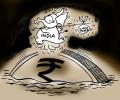
India's public debt ratio, which remarkably remained stable at around 70 per cent of the GDP since 1991, is projected to jump by 17 percentage points to nearly 90 per cent because of increase in public spending due to COVID-19, the IMF said.
 © 2026 Rediff.com - Advertise with us - Disclaimer - Privacy Policy - Sitemap - Feedback - About us - Terms of use - Grievances